
Why Your Accounting Method Matters More Than You Think
Choosing between cash vs accrual accounting might not sound like the most exciting business decision but it’s one of the most important.
Your accounting method determines:
- How you track income and expenses
- When you pay taxes
- How clearly you see your financial health
Pick the wrong one, and you could end up confused about your cash flow or worse, surprised at tax time (and not in a good way).
At Gina Webb Accounting, we help business owners make confident financial decisions every day. Let’s break down these two accounting methods in plain English so you can choose the one that fits your business best.
What Is Cash Accounting?
Cash accounting is exactly what it sounds like you record money only when it actually moves.
How It Works
- Income is recorded when you receive payment
- Expenses are recorded when you pay bills
Example
You send an invoice in December but don’t get paid until January:
- Under cash accounting → that income counts in January
Why Businesses Love It
- Simple and easy to manage
- Gives a clear view of actual cash on hand
- Great for small businesses and freelancers
Potential Downsides
- Doesn’t show future obligations
- Can make your business look more or less profitable than it really is
What Is Accrual Accounting?
Accrual accounting records income and expenses when they’re earned or incurred, not when money changes hands.
How It Works
- Income is recorded when earned (even if unpaid)
- Expenses are recorded when incurred
Example
Same scenario:
- You invoice in December but get paid in January
- Under accrual accounting → income counts in December
Why Businesses Choose It
- More accurate financial picture
- Better for long-term planning
- Required for many larger businesses
Potential Downsides
- More complex
- Doesn’t reflect real-time cash flow
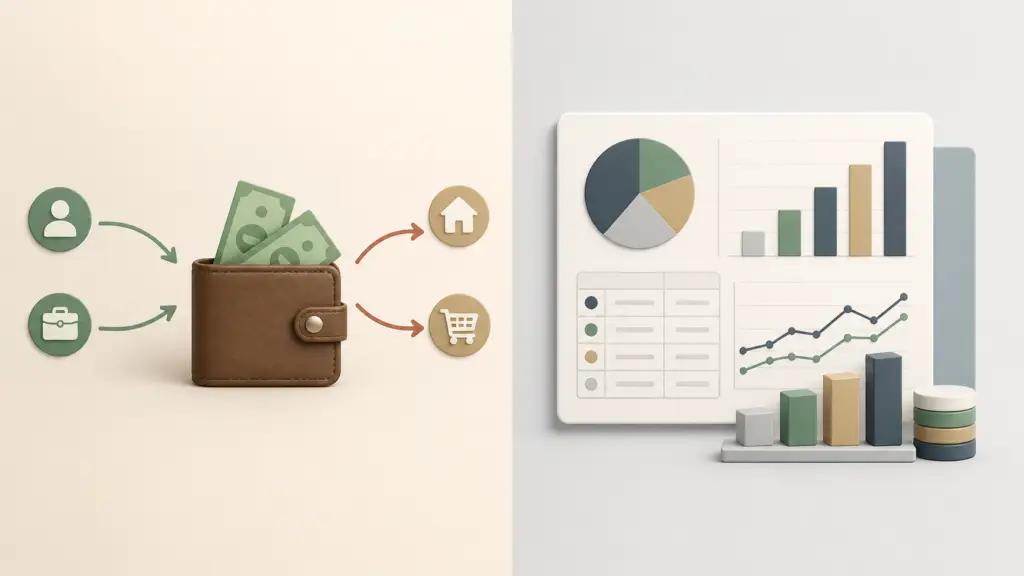
Cash vs Accrual Accounting: Key Differences
Let’s simplify things side-by-side:
Timing of Transactions
- Cash → when money moves
- Accrual → when money is earned or owed
Financial Clarity
- Cash → shows cash flow
- Accrual → shows true profitability
Ease of Use
- Cash → beginner-friendly
- Accrual → more detailed and complex
Tax Implications
- Cash → pay taxes on money received
- Accrual → pay taxes on money earned
Real-World Scenario: Which One Fits Your Business?
Let’s look at how this plays out in real life.
Scenario 1: Freelance Designer
You send invoices and get paid quickly.
Cash accounting makes sense because:
- Simple tracking
- Clear view of money in your bank
Scenario 2: Growing E-commerce Business
You manage inventory and have outstanding orders.
Accrual accounting is better because:
- Tracks inventory costs accurately
- Shows real profitability across months
Scenario 3: Service Business with Contracts
You bill clients monthly but expenses happen throughout the project.
Accrual accounting helps:
- Match income with expenses
- Avoid misleading profit spikes
Pros and Cons at a Glance
Cash Accounting Pros
- Easy to use
- Lower upfront accounting costs
- Clear cash flow tracking
Cash Accounting Cons
- Limited financial insight
- Not ideal for growth
Accrual Accounting Pros
- Accurate financial reporting
- Better for scaling businesses
- Helps with forecasting
Accrual Accounting Cons
- More complex
- May require professional help
How to Choose the Right Accounting Method
Here’s a simple way to decide:
Choose Cash Accounting if you:
- Are a small business or sole proprietor
- Don’t carry inventory
- Want simplicity
Choose Accrual Accounting if you:
- Have inventory
- Want detailed financial insights
- Plan to scale your business
Why This Decision Impacts Your Taxes
This isn’t just bookkeeping, it directly affects your taxes.
With cash accounting:
- You control when income is recognized
- Can sometimes delay income for tax benefits
With accrual accounting:
- Taxes reflect earned income even if unpaid
- Provides consistency for long-term planning
Choosing the right method can help you:
- Avoid surprises
- Stay compliant
- Maximize tax efficiency
When You Might Need to Switch Methods
As your business grows, your accounting method may need to evolve.
You might switch if:
- Your revenue increases significantly
- You start managing inventory
- You need more accurate financial reporting
This transition can be tricky so it’s best done with professional guidance.
How Gina Webb Accounting Can Help
At Gina Webb Accounting, we don’t just crunch numbers, we help you understand them.
We’ll:
- Evaluate your business structure
- Recommend the best accounting method
- Ensure compliance with tax regulations
- Set you up with systems that grow with you
No guesswork. No stress. Just clarity and confidence.
Frequently Asked Questions
Is cash or accrual accounting better?
It depends on your business size and goals. Small businesses often prefer cash accounting, while growing businesses benefit from accrual accounting.
Can I switch from cash to accrual accounting?
Yes, but it requires adjustments and sometimes IRS approval. It’s best to consult a professional before switching.
Do I need accrual accounting if I have inventory?
In most cases, yes. Businesses with inventory typically must use accrual accounting for accurate reporting.
Which method saves more on taxes?
Cash accounting can offer short-term tax flexibility, but accrual accounting provides long-term accuracy and planning advantages.
Ready to Make the Right Choice for Your Business?
Choosing between cash vs accrual accounting doesn’t have to be overwhelming, you just need the right guidance.
Whether you’re just starting out or scaling fast, the right accounting method can make all the difference in your financial success.
Schedule a Consultation with Gina
Let’s take the guesswork out of your accounting.
Get expert advice tailored to your business and set yourself up for smarter financial decisions.Schedule a Consultation with Gina today and move forward with confidence.